College-wide Navigational Links | Go to Local Navigational Links
Local Navigational Links | Go to Main Content
Main Content | Go to Searching Tools
Image placeholder for Home Page

Commodities: Fruits

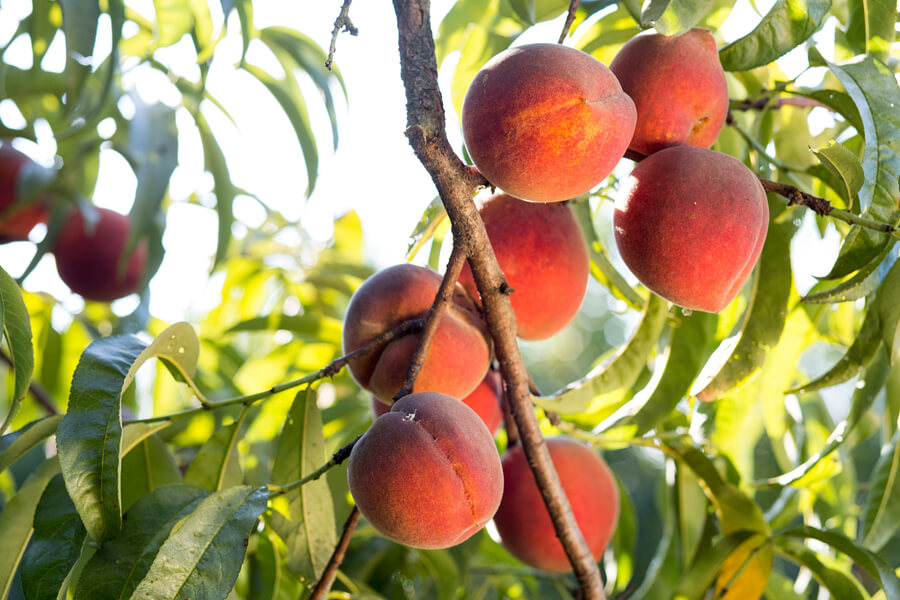
The Georgia Peach

2009 Fungicide Resistance of Monilinia fructicola in Georgia Peach Orchards

Phil Brannen


Control of the fungal pathogen Monolinia fructicola, causal agent of brown rot of peach and nectarines, is integral to the success of Georgia peach production. This pathogen can devastate orchards if left uncontrolled, and it is largely the use of systemic fungicides that allows for control. Over time, M. fructicola may build up genetic resistance, and resistance to existing fungicides has prompted the development of a collaborative effort between Clemson University and the University of Georgia to identify M. fructicola resistance prior to major economic losses. This collaboration has resulted in development of the Profile kit, a self-contained resistance
management system that can be utilized by any trained individual.


Three major systemic fungicide classes are commonly used to control brown rot, and these are the benzimidazoles (BZIs), the demethylation inhibitors (DMIs) and the quinone outside inhibitors (QoIs). A lip-balm assay system was developed using agar amended with critical discriminatory concentrations of fungicides; extensive growth of M. fructicola on slices of the agar stored in petri dishes for 72 hours would indicate resistance. Such information is of use to producers, as being informed that resistant strains are present in their orchards, they may select alternative, active fungicides for future use. Extension pathologists can also monitor resistance trends in the area, and this information will also benefit producers by supplementing local knowledge with a more global understanding of the disease patterns, thereby educating producers of trends in their region.


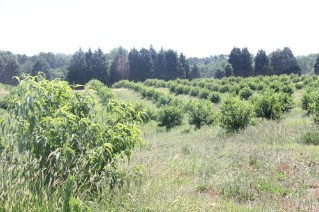
In 2009, testing for brown rot resistance involved extensive fieldwork and trips to orchards across Georgia. By collecting data from numerous disparate locations, maps were assembled to better illustrate where resistance is widespread. Producers were informed of their individual resistance issues, and recommendations were made to avert destructive epidemics of brown rot throughout the state as the season progressed.

Click here to read the full article


Brown rot of peach

Brown rot a a mature peach


Questions or comments?
Contact:

Rebekah Auman

ralong@uga.edu

Searching Tools | Go to Footer Information
Footer Information | Go to College-Wide Navigational Links
University of Georgia (UGA) College of Agricultural and Environmental Sciences (CAES)