
Podcast
All About the Pod Podcast
The University of Georgia Peanut Team presents All About the Pod, a reoccurring podcast for peanut producers, industry partners, and anyone interested in learning about science-backed peanut production.
The goal of this podcast is to educate others about up-to-date problems our researchers see in the field. All About the Pod will feature extension specialists, research faculty, graduate students, extension agents, industry allies, and growers.
faculty recognition
UGA supports African research network breeding climate-adapted peanuts
More than 4,000 miles separate the capital cities of Senegal in West Africa and Uganda in East Africa. Yet both countries grow peanuts and, like other countries across Africa, farmers there rely on peanuts as a food and cash crop. Five years ago, the researchers who help those farmers – plant breeders from Uganda, Senegal and seven other African countries – formed an organization called the Groundnut Improvement Network for Africa, or GINA, to develop peanut varieties that help African farmers deal with plant diseases and climate change.
Collaborative Research & Outreach
Peanut Innovation Lab receives $15 million
Farmers around the world grow peanuts because the plant adapts to poor soils and produces a crop even as droughts become more common. Smallholder farmers around the world grow the crop on modest plots and cook the nuts into traditional dishes or sell the crop for money to send their kids to school. On April 12, the U.S. Agency for International Development (USAID) and the University of Georgia announced a five-year extension of their collaborative research and outreach work in peanut innovation.
Latest - UGA Peanut Entomology Blog
Visit the Blog
UGA Peanut Entomology
Posted by mrabney on Jul 1, 2025
July Peanut Insect Update
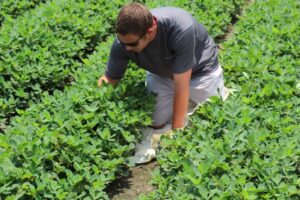
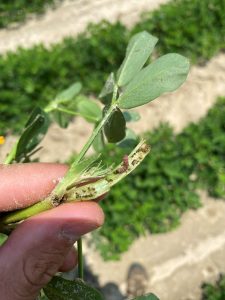
It is the first of July, and the Georgia peanut crop is looking very good as a whole. Insect pressure has been pretty average to this point in the season. Lesser cornstalk borer (LCB) has been the most serious and widespread insect issue of 2025 so far. Growers need to continue scouting fields for LCB […]
UGA Peanut Entomology
Posted by mrabney on May 27, 2025
2025 Cotton, Peanut, and Soybean Insect Scout Schools
Insect scouting schools will be conducted on June 2, 2025 in Tifton and June 10, 2025 in Midville. Crops to be covered include cotton, peanuts, and soybean. These programs offer basic information on insect pest identification and damage, natural enemies, and scouting procedures. The training will serve as an introduction to insect monitoring for new […]
UGA Peanut Entomology
Posted by mrabney on May 22, 2025
Lesser Cornstalk Borers in Georgia Peanut
LCB larva in a peanut stem.
