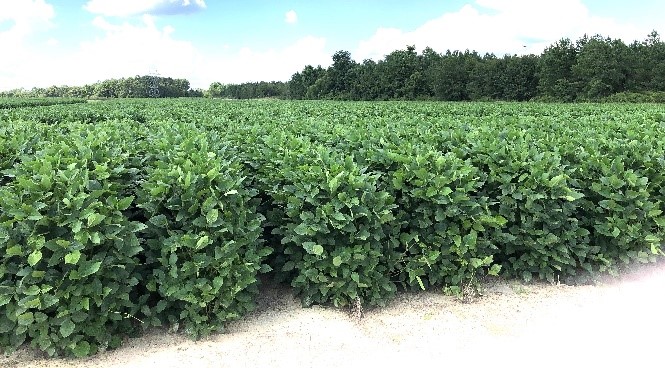
Breeding Soybean Cultivars
Soybeans are the world's largest source of animal feed protein and the second largest source of vegetable oil. Given the destructive potential of the diseases and insects and the cost of their controls and market demands for enhanced seed composition, it is crucial to accelerate the development of disease and insect resistant soybean cultivars with herbicide tolerance and value-added traits to protect the stability of soybean yield and benefit soybean value-chain. For UGA crop and soil scientists, the strategy for soybean cultivar development has been crossing elite cultivars, adapted breeding lines, and improved germplasm to combine the characteristics such as high yield, protein content, improved oil quality, resistance to soybean cyst nematode, root-knot nematode, defoliating insects, frogeye leaf spot, stem canker, and soybean rust. To develop soybean cultivars for better weed control, they have had access to the latest herbicide tolerance technologies from private seed industries, which have been or are being incorporated into UGA elite soybean germplasm. To improve the breeding efficiency and accelerate breeding cycle, new genomic technologies have been deployed in the breeding program to assist in the selection for disease and insect resistance and other key agronomic traits and to predict soybean yield in early generations. Over the past five years, seven soybean cultivars and six soybean germplasm have been released from the UGA Soybean breeding program. Southeastern soybean producers are the primary beneficiaries of this research through the development of new genetic materials with higher seed yields and reduced production costs.